Fantasy football draft party jerseys
A draft party is a sports event where nobody is wearing a kit. Twelve people who have argued about rosters since June turn up in whatever they had on. That is an obvious gap, and it closes in about three minutes per person.
The draft is the one night of the fantasy season everybody shows up for in person. It has a trophy, a commissioner, a running joke that predates half the league, and absolutely no uniform. Handing that room a rack of blanks and a tablet is the rare merch idea that needs no explanation at all — the concept of a name and a number on a back is already the entire vocabulary of the thing they are doing.
Team names were built for nine characters
A jersey back holds about nine characters before letters start compressing into something that reads like a shipping label. That limit annoys wedding guests with hyphenated surnames. It does not annoy a fantasy league, because a fantasy team name is already a punchline optimised for a scoreboard column.
The ones that need trimming trim easily. Drop the article. Lose the second word. Keep the noun that carries the joke. A commissioner who sends the character limit around a week before the draft will get twelve names that fit and twelve people who spent a week enjoying the problem, which is a better outcome than twelve people improvising at a counter.
The number is already decided
Most parties have to invent a number. A draft party has four honest sources sitting there:
- Draft slot. The pick order is the cleanest option and it doubles as a seating chart. One through twelve, no discussion needed.
- Last season's finish. Brutal, funny, and the reigning champion gets to wear a one.
- Years in the league. Quietly the best one for a league that has been running a decade. It separates the founders from the guy who joined last August.
- Championship count. Most of the room wears a zero. That is the joke.
Run the bar before the clock starts
Draft parties have a hard structural break: once the first pick is on the clock, nobody is leaving their laptop. Everything social happens beforehand, and that is exactly where the counter belongs. Open when people arrive, close it when the draft board goes up, and the whole room is in kit for the part of the night that gets photographed.
If your draft runs long — and it will — a second short window between rounds catches anyone who arrived late. Do not try to run the counter through the draft itself. You will be printing to an empty room while twelve people stare at a queue timer of a completely different kind.
A league is small; a league night is not
Here is the honest part. Twelve jerseys is twenty minutes of work for one press lane, and a staffed station with a crew, presses and travel is not economical for twelve people. Local staffed stations start around $5,000, so a single home draft is not the right shape for this.
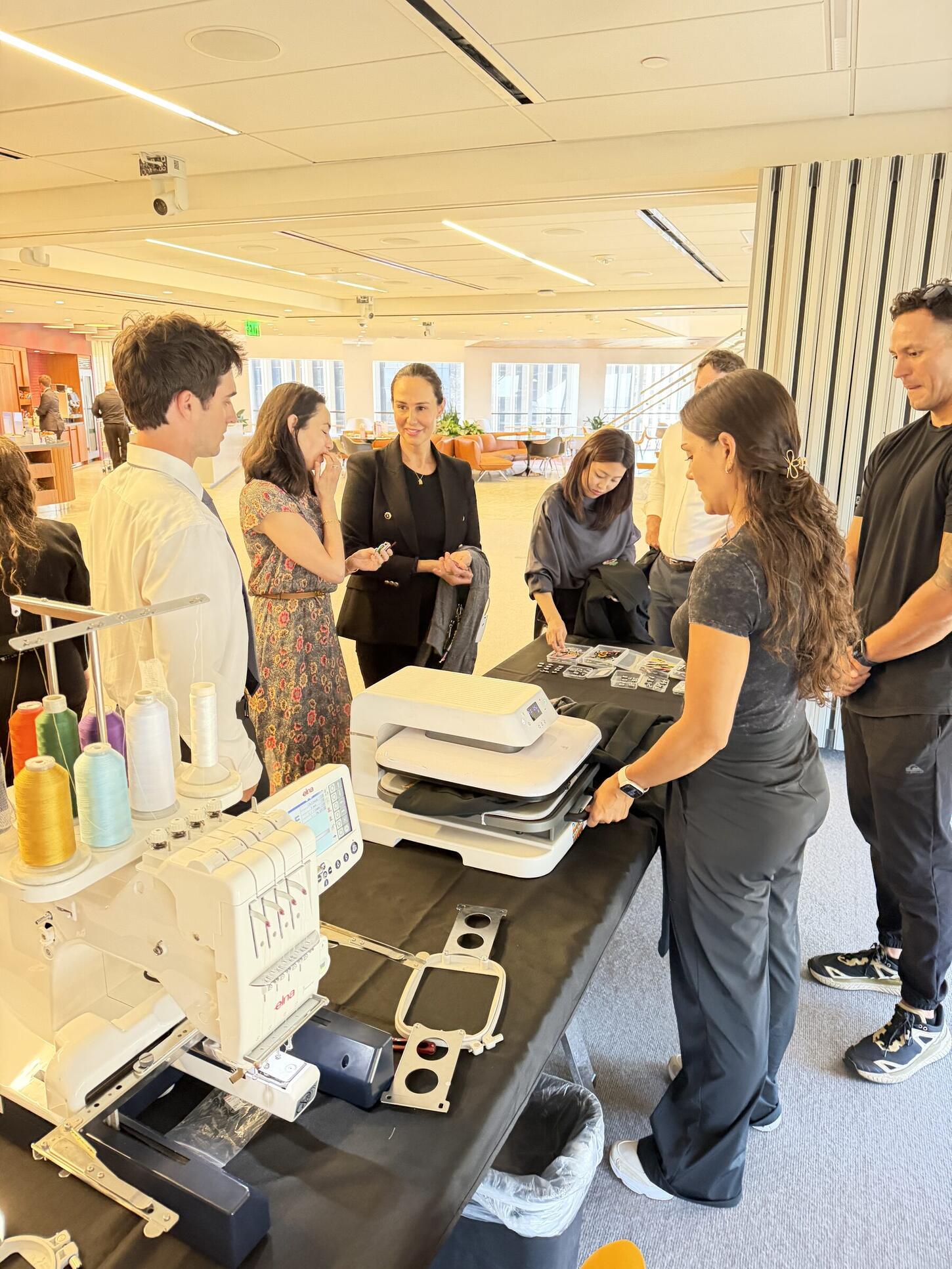
What does work is the bigger version of the same night. A bar, brewery or venue hosting a draft-day event for a dozen leagues at once. A company running an internal league night across departments. A sports retailer or a sponsor building a draft-weekend footprint where anyone who walks in can put their team name on a jersey. In every one of those, the guest count clears a hundred easily and the per-guest maths lands in the same $25 to $40 range most events do.
Two colourways, twelve rivals
Stock two blank colours and the room self-sorts without anybody organising it. At a multi-league venue night, one colour per league turns a crowded floor into something legible in a photo. At a single big league, let people choose and watch the divisions form on their own.
The punishment jersey
Every league with any history has a last-place forfeit. A jersey is an unusually good one, because it is permanent, wearable and specific: the loser's name, the year as the number, and a rack colour nobody else picked. Print it at next season's draft rather than at the end of the current one, so it walks into the room as the first joke of the night.
What to tell the commissioner
Three things, a month out. Nine characters for the name, one to three digits for the number, and a short design menu — three layouts, not twelve, because choice paralysis at the front of a queue is a real thing and a draft room already has enough deliberation in it. Everything else is our problem: the blanks, the sizes, the lanes and the crew.
Plan a draft night bar Watch party version →
Related reading: how to pick a name and number, watch parties and fan zones, and how many guests a bar can handle.